My guest on the podcast today is Bob Edwards, MSW. Bob holds degrees in Religious Education, Social Development Studies and Social Work. Bob has been a Social Worker since 1996, providing psychotherapy, and he was the Director of Counseling Studies at a multi-denominational Bible College, teaching courses in Psychology, Sociology and Counseling. Bob and his wife, Helga Edwards, MSW, have a ministry together called Awake Deborah, in which they use their gifts and training to help people experience freedom and wholeness in their lives and relationships. Helga Edwards has many helpful teachings posted on her YouTube channel, and they had a podcast together at awakedeborah.podbean.com
Bob is another friend I’ve made in my fifteen years long online search for beautiful examples of Christianity. I asked Bob to explain social conditioning for the podcast because it was revolutionary for me to learn from him how this process had contributed to my own patriarchal worldview, and has been impactful in my healing from that. I’m so excited to share this episode with you all today and hope you find it enlightening and beautiful.
Here is the YouTube video I referenced in our conversation: The Origins of Male Authority in the Church, in which Bob describes the process of social conditioning at greater length, and draws historical examples of theologians interpreting the Bible through patriarchal cognitive lenses.
Other works I’d like to recommend from Bob and Helga Edwards:
I read Bob’s excellent book, A God I’d Like to Meet:Separating the Love of God from Harmful Traditional Beliefs, in 2014, and reviewed it here. Edwards’ book explains how Christian theologians, specifically Calvinists, have been influenced by ancient Greek philosophy, which has warped the way they view God. You probably could not find a Christian who would disagree with the statement that “God is love” (1 John 4:8), but how many Christians live as though they are a bug under the thumb of God? This is a really helpful book especially for those who have experienced spiritual trauma or abuse and are looking to heal their image of God.
I also really enjoyed reading Bob’s work of historical fantasy, Keeper of Relics which imagined a harshly matriarchal ancient world in which a young woman challenged oppressive tradition.
Bob and Helga together wrote The Equality Workbook: Freedom in Christ from the Oppression of Patriarchy to help readers identify and remove patriarchal bias from Bible translations. They demonstrate that patriarchy is a human tradition rooted in prejudice and they help women recover from the harmful effects of patriarchy.
Bob is currently working on a series called God Decolonized, exploring historical examples of people in power using the Bible to justify oppression and exploitation. I’m currently reading Issue 3, in which he threads the link from Puritan theocracy to Christian nationalism today. Some of the Puritan quotes are distressingly hateful!
If you enjoy this episode, please Subscribe to The Beautiful Kingdom Builders podcast on your favorite platform, rate and review it, and share it with a friend! Every little bit of encouragement helps! You can watch our episode on YouTube or find it on Spotify, Apple Podcasts, Amazon Music, and more! Here is the video of our podcast recording:
TRANSCRIPT:
Ruth Perry (00:16) Today’s conversation is one that feels deeply personal to me because we’re talking about something most of us don’t even realize is happening inside us, socialization, and more specifically gender socialization and how it shapes the way we see the world, the church, and even scripture itself. My guest is Bob Edwards, a social worker and psychotherapist with degrees in Religious Education, Social Development Studies, and Social Work.
Bob has been practicing since 1996, and formerly served as Director of Counseling Studies at a multi-denominational Bible college where he taught psychology, sociology, and counseling. And he and his wife, Helga Edwards, also a social worker, lead a ministry called Awake Deborah, where they help people experience freedom and wholeness in their lives and relationships.
In this episode, Bob helps us understand how the norms of our culture get inside us, how they become automatic, invisible lenses through which we interpret everything. We talk about how patriarchal socialization can shape the way we read the Bible, the split-second judgments our brains make before even aware of them, and the real spiritual and emotional cost when people, especially women, are told their God-given gifts don’t belong.
I’m grateful especially that Bob was willing to have this conversation as he is dealing with long COVID since 2021. We kept our conversation brief to accommodate his health limitations. But if you want to learn more about this topic, there is a link to an older and much longer teaching from Bob on this topic in the show notes and on my blog, thebeautifulkingdombuilders.com. This is a conversation about unlearning, about healing, and about removing some of the stones that have stood in the way of people fully walking toward Jesus.
Ruth Perry (02:12) Thank you so much for being on the podcast today, Bob. Let’s just dive right in. My first question for you is what is socialization generally and gender socialization specifically?
Bob Edwards (02:15) Okay, well, socialization is really the process by which groups convey their norms to its members. You know, there’s lots of examples we could think of, everyday examples. One would be table manners, you know. When I was growing up, in our household we learned that when you cut your food you held your fork in your left hand.
But then you had to switch to the right hand before you ate the food. Apparently that was in etiquette books from the 1920s and the 1950s. yeah, Another everyday example of socialization is just like rules of the road. North America, you drive on the right. And Great Britain, drive on the left.
And maybe there was a reason for it at one point, but it’s just a custom and gender socialization relates to how different, you know, each gender functions in a social group, what the norms are, norms and customs for that gender.
Ruth Perry (03:20) How does that socialization process happen?
Bob Edwards (03:23) Yeah, well there’s essentially three processes that happen. One is overt instruction. So like I mentioned the etiquette books, you’ll be instructed how to function in a society. The other is role modeling, where people just act as if certain things are true, certain things are a given.
And the third process is really called reinforcement. So if you do what the group expects of you, there’s different ways you can be rewarded. And if you don’t do what the group expects of you, there’s different ways you can be punished is probably the best way to say it. You know, if I would eat with the wrong hand, for example, one of the adults at the table would give me the look, you know. And the look is a form of reinforcement. And if you drive on the wrong side of the road, you’re likely to get immediate feedback from your environment of a variety of kinds, from natural consequences to law enforcement. So, yeah, those are essentially the three processes that help us be socialized into a group’s set of norms.
Ruth Perry (04:28) So your group will socialize you and then how does that become internalized?
Bob Edwards (04:32) Yeah, that’s a good question. So at some point, these external messages, we take ownership of them ourselves. And really, you can tell when that has happened by how you feel when you see somebody eating with the wrong hand. If it’s like I see a person taking a bite and the fork is still in their left hand and it feels wrong to me, then I know that I’ve internalized that. What used to be an external message is now something that’s coming from within.
Ruth Perry (05:01) How does this create a cognitive lens which affects our automatic perception?
Bob Edwards (05:05) Yeah, so it’s interesting. Psychologists refer to it as automatic appraisal. So it’s like, again, the example of the fork in the wrong hand. My experience will be that I just see that as wrong. You know, I just I’m watching it and it’s wrong. And it feels to me that the wrongness is coming from outside. But in reality, the sense of wrongness is coming from inside. It’s coming from the norms that I’ve internalized through the socialization process. And so in a way it affects how we’re interpreting the world around us constantly. You know, it’s just like a mental lens is another way of saying it that interprets everything that we see. And we think we’re just seeing the world as it is, but in reality we’re seeing the world as we’ve been socialized to see it, if that makes sense.
Ruth Perry (05:55) It does well. So then how does that impact our view of the world around us more specifically?
Bob Edwards (06:00) Well that’s, yeah, so it’s interesting. You know, with this driving example, I was just watching a clip recently of, I’m like a motorsports enthusiast. My dad used to sponsor races and stock cars and things like that when I was growing up, so that’s always been a part of my life.
And I remember when I was quite young, was in the mid 70s, and we went to see a drag race because he sponsored a drag racer back then. And there was a big deal about one of the drivers named Shirley Maldowney. So don’t know if you’ve heard of her, but she won the Top Fuel Drag Racing Championship which is sort of the highest level of competition three times and drove this beautiful pink dragster and at the time I didn’t realize why that was such a big deal but she was the first woman that was allowed to compete like women were banned from the sport they weren’t legally licensed and she really broke through that and so she’s kind of a hero of mine for doing that. It’s interesting that whole subculture, that drag racing motorsport subculture, they would look at men and see drag racers, people who can drive well and they would just look at women and think, nope, that’s not for you. You can’t do that.
And it becomes a little bit more serious in other cultures, although in a similar way. For example, Saudi Arabia didn’t allow women to period, until I think it was 2018. And there’s a province in Afghanistan currently where women are banned legally from driving, can’t get licenses. you know, the reasoning given for that is that they’re taught religiously that women are incapable of learning the skill of driving a vehicle. And in Saudi Arabia, they thought it was mixing genders for women to drive in a way that would lead to moral corruption.
So, you know, and, unfortunately we have things like that in our culture as well. We have, you know, women can drive, thankfully, but there’s lots of things in some churches that women can’t do. And most of those things are related to teaching, preaching, and leadership. And people have these lenses. And I don’t think they understand that they have these lenses many times. And I don’t think they know where they came from either. But they just look at women and think, you know, things come to mind like servant, helper, right? We’ve heard that term help meet, which is sort of bad English translation of something in Genesis. That language in Hebrew and even later in Greek just isn’t there. It’s an English invention. And these things really impact men and women every day in the Church and in the world.
Sometimes people look at the Bible and they think they see this gender hierarchy. But if you look very carefully at the text, especially in its original languages and context, the hierarchy isn’t coming from the text. It’s coming from the person who’s reading it. It’s coming from their cognitive lenses. It’s coming from their gender socialization.
Ruth Perry (09:18) I relate to all of that because I was raised in a patriarchal culture. I’m assuming that most people are. And so for the first 30 years of my life, I read the Bible through a patriarchal lens. And it just made sense. It made so much sense that that was how the world worked and that that’s what God meant. And so, yeah, I can totally get how that happens.
You’ve talked about these automatic responses with our cognitive lens, how quickly it happens. Can you explain how quickly we draw these conclusions?
Bob Edwards (09:49) Sure, yeah, for us it feels instant. So we don’t recognize that the meaning is coming from our lenses at all. We think we’re just seeing the world as it is. But we’re really not. We’re seeing the world as we’ve been socialized to see the world.
And I remember I was reading one neuropsychology text many years ago and the time was measured in millionths of seconds. So actually I think it was a fraction of a millionth of a second that our brain assigns those meanings. In fact it’s called stimulus coding. And one of the reasons we don’t realize it’s coming from inside is because it happens so quickly.
But also because it’s subconscious. We don’t do it on purpose. Our brains do it automatically, subconsciously, and almost instantly. So, it’s tricky.
Ruth Perry (10:39) So that an example of that then would be seeing a woman behind the pulpit and just immediately saying no.
Bob Edwards (10:45) Yeah, I’ve seen that, unfortunately, where I was at a Bible college teaching for many years. And there was an occasion at a chapel where a woman was speaking and teaching and preaching and to men and women. And one of the male students from a denomination that is very patriarchal just stood up and walked out and you know spoke to him afterwards and that was his reaction to seeing a woman teaching men. And that was very eye opening to me. And of course then there are so many other denominations represented who didn’t have that reaction because that wasn’t part of their training, it wasn’t part of their socialization.
Yeah, and when I was teaching there, you know, I saw and heard a lot of things that really broke my heart, to be honest with you. Women who felt called to express their spiritual gifts, which come from God, right? Like our spiritual gifts come from God, they don’t depend on anything from us. At least of all our gender, you know, that’s not where the power of God, the love of God, the grace of God comes from. We’re just the vessel, We’re clay vessels and all that grace and love and spiritual power comes from God. yeah, women were being told by some of their male classmates that their call to ministry must come from the devil.
That was one of the worst things I think I heard. And they got reinforcement, like negative reinforcement sometimes from their peer group anytime they would try to express their gifts. And I remember praying about that because it was so disturbing to me. And you know, God, what do we do with this?
And I had this really powerful vision while I was praying. It was so vivid, know, it kind of like I was dreaming, but I was awake. And I saw Jesus with his arms open, inviting all these women to come to him, you know, and on the path to Jesus were all these sharp stones and the women were cutting their feet on these sharp stones and some were still limping towards him. Sorry.
But others left the path altogether and were just sitting down bleeding in tears. And so in that experience I just ask God, what can I do?
I haven’t thought about this in a while, sorry. It’s like when I think about it I relive it.
He just said, Bob, you can remove some of the stones. Just start picking up stones. Right? And so, you know, I said, okay, yeah, I will do my best. I don’t do it perfectly. But God helping me, that’s what I feel like He’s asked me to do, you know, is to remove the stones. So, know, Helga and I have done that together. That’s my wife and I try to do that, again by example and through teaching, you know, and through encouragement. yeah, I felt like God really met me there, gave me some direction.
Ruth Perry (13:53) What a powerful vision and what a powerful calling. That was a calling from God and you’ve certainly been fulfilling it. And you’ve moved some stones for me, Bob, that I’m really grateful for because it’s quite the process trying to unlearn that conditioning. And I didn’t realize just how powerful my background was in my life until I encountered
Bob Edwards (14:05) Thank God. Yeah, for sure.
Ruth Perry (14:16) your work about conditioning and I’m really grateful. I’m going to share a YouTube video in the show notes where you talk about this in length and you go into different theologians who and translating scripture through a patriarchal cognitive lens. And that’s just really important for us to know how does awareness of our socialization and our cognitive lenses weaken or strength and our faith, do you think Bob?
Bob Edwards (14:40) Well, So I do want to touch on one of those theologians, you know, because it’s been so prolific in his writing and his influences, Saint Augustine. And he’s very open in Confessions, he writes something called Confessions, about the influence of Neoplatonism on his theology. And he had a mentor named Ambrose who introduced him to this.
So he had a role model that embraced it and then he had instruction, you know, and he got all kinds of positive reinforcement for choosing this path. And he says that he made sense of the Bible and God through the lens of this ancient Greek philosophy. And unfortunately, that particular ancient Greek philosophy is extremely patriarchal.
And just to give you, for instance, when he read Genesis, where Adam says of Eve, this is bone of my bones, flesh of my flesh, you know, meaning, at last somebody like me, right? Somebody comparable to me. Augustine didn’t see it that way. And he writes about this in one of his letters and says, so here we see woman stands for flesh.
Therefore the man must stand for the spirit. Therefore, just as the flesh must be subordinate to the spirit, women must be subordinate to men.” So that’s what he saw when he read that passage. But that’s not what the passage says. That’s not what’s there. But he evidently didn’t recognize his lens, which is so often the case.
And so you ask like, can it does this strengthen or weaken our faith when we explore these things? And I mean, for me, it was a tremendous encouragement to my faith because some like our culture is is fallen. Like humanity has fallen into sin and it is our cultures are are filled with injustices and biases and prejudice and fear and a felt need for control. And we can project that onto the Bible, start calling things like that God’s will. Sometimes we’re even seeing that today, even at a national level, things we’ve seen in the church and been speaking out against, now seeing in government.
But when we do this kind of work, right, with humility and prayer and study, we can begin to peel away these layers of bias, prejudice and injustice that are those sharp stones that stand between us and God. So I do believe it can strengthen our faith and I think it’s God’s work.
Ruth Perry (17:03) Amen. Thank you so much for being faithful to that calling, you and your wife.
Bob Edwards (17:07) I’m so thankful
I could be and I’m glad I could do this today. Thanks so much for having me.
Ruth Perry (17:13) God bless.
Bob Edwards (17:14) God bless you too.
If you enjoy this episode, please Subscribe to The Beautiful Kingdom Builders podcast on your favorite platform, rate and review it, and share it with a friend! Every little bit of encouragement helps! You can watch our episode on YouTube or find it on Spotify, Apple Podcasts, Amazon Music, and more!
In this episode, Dr. Jennifer Powell McNutt discusses her insights on Mary Magdalene from her book, The Mary We Forgot.
Dr. McNutt describes her own faith journey leading her to the dual ministry of Church historian and Presbyterian minister, and then delves into the historical mischaracterization and significance of Mary Magdalene, and what “the apostle to the apostles” can teach us today: from the importance of her healing from demons to her financial support of Jesus’ ministry, being the first witness and messenger of the resurrection, and as a missionary to France in her later life.
Dr. McNutt and her husband, Rev. Dr. David McNutt, have a ministry called McNuttshell Ministries, a teaching, preaching, and writing ministry that serves both the church and the academy by sharing the Christian faith “in a nutshell.”
I was really excited to speak with Dr. McNutt after reading her beautiful, pastoral book, which was gifted to me from my brother, Rev. Dr. Matthew McNutt. It’s always fun to meet another McNutt doing good work out in the world! Here’s that adorable picture of my family with our nut shell sign my dad made; I’m guessing this is 1983 or 1984:
If you enjoy this episode, please Subscribe to The Beautiful Kingdom Builders podcast on your favorite platform, rate and review it, and share it with a friend! Every little bit of encouragement helps! You can watch our episode on YouTube or find it on Spotify, Apple Podcasts, Amazon Music, and more!
TRANSCRIPT:
Ruth Perry (00:16) Well, Welcome to the Beautiful Kingdom Builders podcast, Dr. Jennifer Powell McNutt. I’m so honored to have you here today.
Jennifer Powell McNutt (00:20) Yay! Thank you so much for having me. What a delight.
Ruth Perry (00:25) I feel like, like you talk about in your book, our sibling relationship in Christ, and then we have that added layer of the last name.
Jennifer Powell McNutt (00:30) haha McNutt. I know we are definitely related. Well, by marriage. yeah. Yes.
Ruth Perry (00:38) Absolutely. I’m married out of it, so I’m Perry now, but growing up McNutt was very special, and so I thought that I should have my brother Matthew on so we have extra McNutts to join the fun. I wanted to show you this cool picture of my family. My dad made this sign with a bunch of different nuts, and I thought of this picture when I read the name of your ministry, McNuttshell Ministries. Very cute.
Jennifer Powell McNutt (00:46) I love it. Can’t have enough McNutts. Lean into it, you know? Just embrace it.
Matthew McNutt (01:04) I always just, yup, I always called my stuff the Nutt house, cause it’s like, we’re…
Jennifer Powell McNutt (01:09) Oh yeah. When I started teaching there was the McNutty professor, that movie or whatever had come out, know, so there’s that too. I was like, oh no.
Ruth Perry (01:19) I appreciate you bringing a lot of nobility and dignity to the name, you’re doing us well.
Jennifer Powell McNutt (01:23) Good, I’m glad I’m accepted. I’m earning my stripes. That’s good.
Ruth Perry (01:29) Yeah! My brother actually bought me your book for Christmas last year. And so that’s another reason why I wanted to have him in on this conversation, because he’s an avid reader and he loved your book. And I loved your book. I’m very excited to talk with you today about Mary Magdalene. But first, I want to talk to you about you. I’d love to hear about your personal faith journey, your testimony and just a little bit more about your background before we get into the book.
Jennifer Powell McNutt (02:02) Yeah, thank you so much. Yeah, my faith journey just begins with my family and the ministry that my parents led and as pastors, co-pastors even in our denomination, we’re Presbyterian and having met in seminary and all of that and just knowing Jesus from the beginning and loving Christ and wanting to follow Him and feeling like a part of my parents’ ministry in a very powerful, compelling, persuasive way. And those church communities, you know, just really embracing us too. In California and Texas. But also churches that they had after I went to college in Pennsylvania, San Diego, and now they live here with us, retired, mostly retired.
And so for me, there isn’t a time that I don’t remember loving Jesus and wanting to follow Him. But there were many particular moments where the Lord has directed me in my life and calling and desire to be equipped for this vocation that I’m in as a professor at Wheaton College, but then also as an ordained minister in the Presbyterian Church and hoping to bridge that church and academy, that work, that it will enrich students and also churches. So for me, it just came from really as a child being called into ministry and that was like a pivot for my whole life. I was 10 years old and I was like, I’m going to seminary. yeah, it’s just been so interesting to see how I’ve been directed, in terms of my discipline too, and then just loving, especially the life of the classroom and know, adult education in the church and kind of the preaching parts came a little bit later for me. And I enjoy that as well so much, but my primary call is to the classroom. And so, you know, just how you go through life and make your decisions and do the best you can to be faithful and somehow the Lord directs you in the right path. So that’s been my hope at least.
Ruth Perry (04:20) That’s really beautiful that you have the academic and the pastoral dual calling. I’m curious to know, what do you see as the, greatest benefits of your church history background and expertise in your church ministry?
Jennifer Powell McNutt (04:35) Yeah, I just love to make that knowledge accessible that I really feel the importance of that to come in and to help deepen those roots and a sense of confidence in the faith and growth in the faith and also inviting those questions to that faith seeking understanding I think is so important.
To be able to grapple with the places where we’re uncomfortable, where we feel a tension, where we find a disconnect or a dissonance with our context and what Scripture’s saying or how we understand things. Those are all opportunities for going deeper, for the Lord using that in deeper ways. And so I love that part of it.
I’ve been doing a lot more just with all different denominations, churches all over the country and even outside of the US that come from their own history and their own context and the value of knowing the fullness of church history to the best of my abilities. Obviously there’s more than I could ever fully grasp, but nonetheless that you can speak
to people in their local spaces, in their local context in a way that maintains that larger story and helps them to see how they fit into God’s particular story and that universal story. So I’d to distill a richer perspective and connection that Christians have with one another today and with the past. So that’s my hope.
Matthew McNutt (06:14) Is there something about Wheaton College in particular that drew you or that you’ve particularly enjoyed serving there?
Jennifer Powell McNutt (06:22) Yeah, thank you. So I did go to Westmont College. It was Christian, liberal arts education. That was where I was really nurtured and knew about Wheaton. I never really expected to be at Wheaton. California girl going to the Midwest wasn’t exactly in my bingo card. yeah, but having taught as a doctoral preceptor in the university settings, I did long for the kind of relationship that you can have with your students, the mentoring relationship that you can have with your students at a Christian school and being able to like care about them as whole people and not just about their grades, or just about their minds, but about their whole life and who they are and kind of shepherding them through this time that we have together. And I found that there was kind of more of a distance at some of the university settings. We were required to have quite a distance. And so it’s just really wonderful to be at a school where you can just like pray with the student and they can share more about who they are and their sense of calling or vocational purpose. And yeah, you can just support them in a holistic way.
And so that’s the thing I’ve loved the most. And I think you would get that at other Christian schools too. But Wheaton does that really well, that integration of faith and learning, the connection between Scripture, theology, and context and just seeing how all those pieces fit together. And a lot of it too is how they valued me and supported me and made a place for my expertise and a place for me to thrive. So I’m very grateful for that. It’s been 18 years, so there’s definitely been ups and downs. Nothing is perfect, but on the whole, I would say, yeah, I think it’s been a really good experience.
Ruth Perry (08:28) Another follow-up question I have about your background is thinking about the Presbyterian denomination with their theology and their tradition and their history. What do you feel like the Presbyterian church has to offer to the broader Christian family that is of particular value and beauty?
Jennifer Powell McNutt (08:45) Well, I love that question. Thank you. We don’t always get to answer that. You know, like so many traditions, the Presbyterian Church is pretty fragmented, you know, in terms of so many different branches, certain branches that wouldn’t allow me to do ministry in as a woman. Other branches that don’t necessarily align with my own theological convictions fully.
So it’s always complex to navigate. And then there’s perception too, you know, of like a dominant voice in the tradition or majority voice in the tradition. So I always want to be very generous in my Reformed perspective. And the things that I love are the elements of humility that come into play for the tradition. I think it’s really important to remember, and I’ve spoken on this many times in different venues about that if we go back to our origins, our inception points, like in the 16th century, in the Reformation with John Calvin in Geneva, that so much of his ministry was dedicated to people who were displaced and living in exile and suffering from persecution. And so the theology that he emphasizes is God’s power and ability to be present with us, to save us even through the most devastating, catastrophic moments in our lives and that God’s goodness and God’s ability to save us is never diminished by those circumstances. And really trust in God’s loving, fatherly activity in our lives.
Also, I would say, that, as I mentioned, the humility, but that, the transcendence between, like, us humans and God, I think those are good reminders, too, as well that he’s capable to save and willing. Those are parts that I love, also love about Scripture, you know, Scripture as like, glasses that we put on to understand, to see the world clearly and to understand the world around us. I really strongly affirm that I believe that and experience that just at many different levels. So of God’s activity through that. Those are two things. I’ll add one third one. And that is something called, a little lesson here, duplex gratia, double grace.
I love the duplex gratia, which is that we are, just as we’re justified, that that is linked to our sanctification, that the Holy Spirit is at work in uniting us to Christ, in transforming our lives and sanctifying us, that we might be holy and righteous. So, those are three things I think that are sometimes missed in perceptions of the Reformed tradition, that context can give us some gratitude and appreciation for.
Ruth Perry (11:34) Beautiful, praise God.
Matthew McNutt (11:35) You wrote later in the book that Mary Magdalene’s place in the biblical story has been buried in the cellars and attics of our churches.” What drew you to study and write about Mary Magdalene?
Jennifer Powell McNutt (11:43) Yeah, thank you so much. There are a lot of layers to the story. So I’ll just say kind of one thing and then maybe you want to follow up. But one thing that I have been struck by is in coming out of a tradition in the branch of the Presbyterian Church that I was in, they were very attentive to women in the Bible. And there was a place to talk about that and to think about, I would say, kind of a Galatians 3.28 like, you know, church experience so that you could be called, you have gifts from the Holy Spirit that are not gendered and you know, that God could call you to serve anyone.
But even in that space and even in that context, there was still kind of a separation between some of the focus on the women in the Bible, in the pulpit, and the focus on the women of the Bible in the women’s ministry. So we still had that. And then in addition to that, in another layer, I don’t think anybody wanted to touch Mary Magdalene. So I grew up knowing Lydia and Deborah and Phoebe and those names before I was ever taught how to understand, think about Mary Magdalene.
And I think that’s a much larger problem. It’s not just in certain types of Protestant churches. It’s not just in the Protestant tradition. It’s in the Roman Catholic Church. It’s much broader than this. It’s kind of a Christian issue of how to interpret and understand Mary Magdalene. And so when, as a professor with many years in my research, I began to notice more and more in my classrooms and discussion theology I was doing references to women in the Bible and the Reformation and seeing how they are talking about Mary Magdalene kind of brought it to the surface of this is really different than what we see in our culture because there’s a cultural discussion and also what we’re seeing in our churches.
Kind of seeing the need. And for me, first, I only saw it as for women. Like, let’s talk about Mary Magdalene for women. And I was invited to have those opportunities to share that kind of perspective. But through the process of getting the book to be accepted and published, I began to realize, this is for the whole church. It’s not just for women. And that’s because the gospel writers invite the whole church to see Mary Magdalene’s presence and her witness and her calling by Christ to proclaim. So that’s been great. So it’s kind of like a growth process, I would say like over time, you know how the Lord plants a seed, you know, I was a doctoral student when the Da Vinci code took off, I was in Scotland, everybody was talking about it. It was in every bookstore window. There were bookstores back then. you know, every bookstore window, everybody’s talking about it. And now when I look back at that time, I realized that the church was so susceptible to that cultural moment and the confusion that erupted from that cultural moment because there had been no clarity about her, you know, before that.
So I bring also that to the writing of the book, that experience as well. Did you guys experience that? I don’t know. Like when, you know, when the DaVinci code came out and.
Matthew McNutt (15:16) I remember when it came out.
Ruth Perry (15:16) I felt like reading, one of the things I loved about your book is that all of the references you made were a part of my life. I just felt like we would be friends if we knew each other. And I really enjoyed that aspect of reading your book too. I was thinking about when I first started, so Matthew and I grew up conservative Baptist. And so we were definitely of a mind that, spiritual authority belonged to men in the church and the home and read the Bible through that lens. And when I started rethinking that, because I had received a call from God when I was 30 years old, so I was way behind you in that process.
But it was when I was 30, so I started trying to read the Bible through a new lens. And I was frequently told I was reading the Bible through a flawed hermeneutic because most of the people I knew were still conservative. So they were being critical of my questions and the new things I was discovering in the Bible. And I just love that you describe it as a hermeneutic of surprise. Just seeing how God elevates women in the Bible. I don’t know that everybody listening to my podcast knows what the word hermeneutic means, so maybe explain the word hermeneutic and then also just talk more about that hermeneutic as a surprise.
Jennifer Powell McNutt (16:32) Sure, absolutely. Thank you. So hermeneutic means basically just interpretation. And so when you study hermeneutics, you’re studying different ways of interpreting. So there’s different approaches or methods for interpreting Scripture. Of course, hermeneutics can be used for other sources as well. But there are those critical lenses that are used to understand the text and methods to get at the meaning of the text in its context or how it, you know, the different, they would say, percopes or like portions of Scripture, how they are placed intentionally side by side and what the meaning is for that. There’s all different approaches.
So I was coming from a context that was kind of more like saying, there’s not enough women in the Bible. It’s not enough and it’s not empowering to women because they’re not really present enough in the gospels or in the texts. And so as a historian, it’s important that we understand literature in its context, you know, what were the practices and approaches that you would expect in that time period for how they would write about it. And the thing is, is that they wouldn’t reference women at all.
And so when we say like 200 named women isn’t enough, we’re kind of coming at it from, I think, the wrong side. We need to turn around and go the opposite direction about what does it mean to add 200 women into the text and to highlight their names. Or just to leave them unnamed even, but still present in the story is really interesting. So the hermeneutic of surprise is intended to challenge the hermeneutic of suspicion to an extent, to say that suspicion isn’t always the best disposition of a reader of Scripture because we can miss all the surprising ways that the text in its context is telling the story. So we can be surprised ourselves from our own context, we don’t expect, you know, gentleness to be emphasized or whatever it might be.
And that’s like us growing in how the text relates to our place today as Christians. But the text itself already has embedded moments of surprise within the text that we miss if we only read it from our context. We have to try to read it from the space in that time to see what is being highlighted. So I just have a few different examples that I try to show, but I think once you approach it that way, you’ll begin to see the whole of Scripture, so many surprising parts of Scripture that just sometimes requires to sit a little bit more with, to seek to learn and to study and to, sit under a, knowledgeable teacher to help you to read Scripture with more insight and perspective. I think that can be very useful. All of us can benefit from that at different points, including myself.
Matthew McNutt (19:52) I mean, you’ve already touched on this a little bit, right? That Mary Magdala’s story has been muddled and obscured throughout history. And even just talking about how the church is not very familiar with her. How do you disentangle her from the other Marys in the Gospels, from the unnamed women that she gets lumped in with?
Jennifer Powell McNutt (20:13) Right, yes. Well, I think the first thing, my first question was how did this happen? So again, coming in as a historian and trying to go back to some of the original interpretations of Mary Magdalene. So especially looking at Irenaeus of Lyon is a father for the church in the West and the East. So it’s a really interesting starting point to see a trajectory that’s established there and to understand how the early church especially was engaging with Mary Magdalene because the church can’t ignore her because she is the only one who is named by all four gospels as present at the empty tomb and then as first witness by both John’s gospel and Matthew’s gospel.
And so there’s no Easter sermon without Mary Magdalene. And that means that she is someone that we can kind of track in the history of interpretation and see some of the shifts that took place. The thing that I became alert to was how, and I talk about in the book, so with charts, which I think are really helpful because it gets complicated. But what I noticed was especially the importance of Augustine’s voice for the Western branch of the church in his readings of the women that anointed Jesus, that there’s a story of a woman anointing Jesus in each of the four gospels, and that three of the women mentioned are anonymous, but that one woman is noted as Mary, who’s coming from Bethany.
And so we know her as Mary Bethany. And that was really the beginning of the shift to see her as a prostitute because of Luke 7. So just go back and read Luke 7 and then notice too that Luke 8 is where Mary Magdalene is named and identified with Magdala. so the church kind of gets into seeing her as the sinner woman and so there’s first the conflation of the anointings and then there’s a conflation with the Marys and that’s formalized in the seventh century and that continues to be the tradition. But what I loved about the history of it too is that it’s not a very simple story, it’s not so consistent.
And there are many other layers to how the church has also remembered her because there’s other parts of her story because she’s so prominent in so many elements of Christ’s ministry from Galilee to Jerusalem, all the way to the empty tomb. So she’s there, you know, for all these things. And so sometimes when the church is emphasizing, evangelism and preaching, they focus more on her as a preacher and as an evangelist and as an apostle to the apostles. And so I was able in that research and in that tracking also to correct some of the confusion around the history of her reception, as well as to confirm, that this has been very complex. Like, it’s not surprising that we’ve been confused about it for so long.
And then I think because of that confusion, the church has been uncertain about what it means when we point to her. What does it mean when we point to Mary Magdalene? I never had anyone say to me, you should be like Mary Magdalene. You know, as a young Christian woman, like that would be like, is that an insult? Like, what are you saying to me right now? And so I think the church has been a little bit maybe afraid even to point to her because of the, you know, lack of clarity in that message. And so my hope is that the book can kind of give her back to the church in a clearer way to say, we actually really need to grapple with this because she’s pointing us to the risen Christ and she has such an important role in the gospels. It’s not something you can set aside. It’s actually really critical to our understanding of Jesus. And it’s okay, you know, to point to her because this is what she means according to the Bible.
Ruth Perry (24:37) Yeah, you use the language of the church playing telephone with Mary Magdalene, which I thought was really appropriate. And then you also talk about our collective memory loss about her. But it was very fascinating for me to read about Mary beyond the Bible. I had never heard anything about her history past the Bible. I’ve heard about the apostles. And so that was really fascinating. Would you tell us more about where Mary went after the biblical text?
Jennifer Powell McNutt (25:07) I mean, we don’t know for sure, so I’ll just start there. But it is pretty remarkable that the church has held on to the remembrance of her, her accepting Christ’s call to proclaim that he’s risen and also the words that he gave to her and that he doesn’t that she doesn’t stop doing that. I like to it’s not like she’s just like passing a note to the remaining disciples, and then goes on her way. the church has remembered her as living out that call for the rest of her life. And that makes so much sense to me as someone who, as Mary Magdalene was someone who was welcomed into his ministry from Galilee, who was a benefactor and disciple, was a student of Jesus’s.
Then was the cross and at the tomb and all these places. So I like to highlight that she’s there for everything and the Gospels mention that to us. So then the church remembers that she continues in her ministry and that she actually travels to France and that she evangelizes France, which by the way is the beginning of Christianity in the western side of the Roman Empire.
So for her to go from Jerusalem to France is absolutely possible. And the fact that all of the followers of Jesus are really scattered or missional in their work after Pentecost and even kind before that or in the Jerusalem area, but Pentecost really is like moving people outside of Jerusalem into these other locations and places. And then the dangers that were present for Christians in this time. We know that from a second century Greek philosopher who was an opponent of Christianity, that he knew about Mary Magdalene.
He knew that the Christian faith was based upon her testimony of Christ’s resurrection. That was like a widespread thing that was known. And he is very critical of her because she was weeping and she’s a woman and you’re not supposed to have those things as the basis of your truth. Which is surprising, by the way, the hermeneutic is a surprise.
So we know that she was known at the time and so her life could have, very likely would have been in danger as a result. so, yes, there’s lots that is possible about that. And we as Christians in the West, though in France they remember this, but outside of France, a lot of people don’t know this part of our Western story that it’s rooted in Mary Magdalene’s claim and witness to Christ, the apostolicity comes through her for the Western Church. And so, and that’s not just a Roman Catholic tradition, but that’s also evident in recognized in the Reformation among some of the Protestant traditions that are emerging in the Reformation. yeah, so that’s very exciting, I think, to highlight and feature.
But in later periods as the Roman Catholic Church was moving towards a hermetic monasticism, in kind of isolated living in caves, that kind of thing, her story takes on a lot of hagiographical elements. It too easily lines up with the way that you’re supposed to be devoted to the church in that time. Like she suddenly seems like a medieval woman. She’s definitely not a medieval woman. So that’s when you’re like, that’s, that’s pretty ridiculous. You know, that’s, that didn’t happen. But, did she come initially to France? She certainly could have. And so that’s something to know, I think, and, to allow for the possibility of.
And yeah, in the book, I’ll just say our family went there, I share about our journey going to those churches and those locations where she is remembered and just kind of sorting that part of the story out and thinking through it. yeah.
Ruth Perry (29:19) And possibly seeing her skull. That’s quite something. Yeah.
Jennifer Powell McNutt (29:22) Yes, we saw a skull that is attributed to Mary Magdalene. That was shocking.
Ruth Perry (29:33) I was also thinking in your answer about the danger that she was in in France, the danger that you point out that she was in at the foot of the cross, bearing witness to Jesus’ crucifixion. I had never thought about that before.
Jennifer Powell McNutt (29:37) Yeah, just the Roman Empire. Yes, it’s so interesting to think too about how the Gospels do give us all the pieces, even though we don’t get the fullness of the story. But we have to remember that there is a selectivity for all of the people in the biblical stories. You know, we don’t get to hear very much about Joseph, you know, but we know he was so important and that he had this, you know, what is highlighted about him is what we are invited to remember.
And, you know, we love to see more about Jesus’s mother. There’s a few glimpses. And then the last time we see her is in the upper room waiting for Pentecost to take place. So that also allows us to see that she was present in other ways. so we want to value the ways in which Scripture reveals portions of the story to us, even as we recognize that the full, all of the elements are not always revealed to us. And I don’t think we need every element in order to appreciate the pieces that Scripture does reveal.
Matthew McNutt (30:50) You talk about the importance of correcting mischaracterizations of Mary Magdalene, and there’s a part of it, as a youth pastor for 25 years, I’m kind of dancing around my head, man, what would it look like to more intentionally teach about Mary? You know, when there’s time looking at the calendar to teach and do all of this, why should Christians care about teaching about her, about correcting these mischaracterizations, about taking time to invest in knowing Mary’s story.
Jennifer Powell McNutt (31:26) Thank you so much. I love that question. I’m going to have a hard time keeping this tight. So I can talk about this a lot. Okay. So the first thing I would say is we need to expand our imagination for how we can see her as theologically and biblically significant in our ministries.
There are many pieces to her story, but oftentimes it becomes reduced to was she a prostitute or not? It’s an easy answer. She wasn’t. Okay, so now we have to move on. Who was she? Okay, so this is where I think actually churches could and should emphasize her as an example for stewardship, right? What is she doing? She is a patron of Jesus’s ministry. Luke chapter eight highlights her and other women that are financially supporting Jesus’s ministry and traveling with him. And when we realized that not everybody was allowed to go with Jesus, not everybody was invited to be with him in that kind of intimate way.
We can say, this is really significant. Their presence there is significant. So it actually completely transforms. And I would say that I was writing this before The Chosen was kind of starting to do this, but The Chosen is such a helpful step forward in allowing us to reimagine beyond the 12, right? So there are the 12 men that are invited to be part of Jesus’ ministry, but there are many women, that’s what Luke chapter eight says, many women, and then certain women who have key roles that are with Jesus and traveling with him and receiving teaching and being part of his ministry and probably were part of the 70 that were sent out because many times these were male and female, like married couples, according to some of the best scholarship on the topic. So we just need to expand the ministry to, and we need to be clear when we say disciples, we actually mean men and women. We say the 12 we are talking about these men. And those are not exactly the same.
So we need to change the way we talk about it so that people don’t associate disciples with male exclusive participation. So that’s one part of it. It transforms the way we see Jesus’s ministry. We can see how stewardship is involved, right? How we’re using finances to support him. And then we can also expand our understanding of the importance of the empty tomb. My experience has been, and again, even in a tradition that has been alert to women’s call to ministry that we don’t know anything about the women of Luke eight. And then all of a sudden on Easter morning, we’re like, we hear that there are women there and we think that they’re just any women, but they aren’t. They have been there the whole time. And so their witness is so much greater actually than just that they happen to be there at the empty tomb in that moment. But it’s everything that Jesus has done for them up until that moment.
And so in Mary Magdalene’s case, now we have to grapple with demon oppression, right? We have to, and that is something our churches definitely don’t want to talk about in my experience, right? How do we talk about this part of her story? So these are women who have been healed from the grip of basically the greatest evil that they could experience. In Mary Magdalene’s case, seven demons, Jesus talks about how significant seven demons are in Matthew chapter 12, he highlights that for us, what could happen with seven demons, and that’s what she has. And so that’s where we have to say, what does it mean when the gospels are highlighting for us that Jesus conquers demons, right? What does that tell us about who Christ is and about the power of the Lord and about God’s kingdom and the kingdom come?
And Mary Magdalene’s witness then, if we are so wrapped up in thinking about her as a prostitute and unwilling or afraid to talk about her as a woman who has been delivered from demonic presence, she is the witness at the tomb, then we are going to miss the fullness of what it means when she points us to the risen Christ. We’re going to think it’s one thing when it’s actually another.
So there are many women, there’s different groups of women that are there, but the particularity of Mary Magdalene’s presence is highlighting for us that Jesus is King, that he has conquered evil for us and that God’s kingdom has arrived. And so that’s how Jesus invites us to understand this part of his ministry.
And when we do that, we can also embrace the texts that are outside of Scripture that recognize and identify Jesus as exorcist, that this is widely known at the time that he is a very successful exorcist. So that brings us also into their context, into that time and what that means for us today. Then pastorally, I would just say it means that whatever the thing is that has gripped you, right? In that, you know, I like to talk about a sheep that is, you know, at the bottom of that pit.
Jesus talks about this in Matthew 12, you know, the sheep that’s at the bottom of the pit, it’s the Sabbath and no one can save this sheep. And yet the Son of God can, right? The Son of God comes in and can save the sheep, pull it out of the pit. And that’s us. That’s a proclamation of God’s power in our lives and the possibility of his work in our lives. So that’s a message that the church needs to hear, I think, it’s exciting to hear that and when we receive her, we can receive that kind of biblical theological message. Does that answer the question? Okay.
Matthew McNutt (37:14) That’s good. That’s good. And it’s funny. I was even kind of reacting to, know, when you talk about people’s aversion to talking about her because they think she was a prostitute, which she was not. But then I was also sitting here, but it’s funny. We have no aversion to talking about Paul, who was a murderer and a blasphemer before he started preaching. We have no aversion to talking about Matthew, who was a tax collector, which was, you know, a traitor to the people. And, such a horrible practice that they would separate sinners and then you had tax. It’s like we don’t have that same aversion for the men with complicated pasts as we do for her.
Jennifer Powell McNutt (37:53) Yeah, exactly. That’s so true. Or we make all the women former prostitutes, right? That’s the other thing that we end up doing is saying this is the only story that a woman in Scripture can have. And so we miss, you know, these other stories.
Matthew McNutt (38:08) I love the book, Vindicating the Vixens, which is just a collection of stories of how we’ve sexualized and vixenized all these different women whose stories were not actually like that. It a really cool book.
Jennifer Powell McNutt (38:11) Yes! I love that book too, thank you for highlighting that. It’s really important book.
Matthew McNutt (38:24) Except we’re talking about yours.
Jennifer Powell McNutt (38:26) That’s okay. I tried to fill up my book with footnotes, with citations, so people can go. You’ll see that book is in there and referenced, and many other wonderful books. I was kind of bringing those biblical voices together, seeing a need even in biblical scholarship and commentaries, to try to piece together the story of Mary Magdalene. So I’m bringing the church history, but also some of the best biblical scholarship out there to help us to see the story. So yeah, please use those footnotes and read these other books, because they help me too. That’s how I was able to do my work.
Ruth Perry (39:03) You say, “In an era of de-churching and faith deconstruction, Mary Magdalene can serve as a model of steady faith in Christ, even when our churches fail us and hurt us.”
And “Her readiness to run is the outworking of her readiness to follow and give of herself and her resources to Christ’s ministry.”
I thought those are two beautiful quotes about Mary Magdalene from your book, but I was also wondering, How does her faith challenge and inspire you and your discipleship in ministry? Dr. McNutt.
Jennifer Powell McNutt (39:33) Thank you so much. I was really struck when I was kind of piecing together her story, how everything around her was really crumbling or changing rapidly, you know, in just a very short amount of time. The shock of, the betrayal that took place within their community, and her being elevated out of that in a very special way. There are so many surprising things going on and it did really strike me because working in church history, you will very quickly come to all the failures and problems that the church has faced, the mistakes, the blind spots, the failures.
They’re there. And of course, in our church today, we see those too. I think church history can help with that, to see there is an enduring struggle for the church to live in to sanctification and to keep repenting. Just as individuals, are called to live a life of repentance to continually turn back to Christ, so too are our churches, and to focus on Christ, to put Christ really at the center. And I think for me, Mary Magdalene has become such a powerful example of centering Christ in your life. I’m amazed.
Whatever it was she was doing before, we don’t really know what was going on exactly before that, except for her suffering. But we don’t know exactly what that looked like or anything. But the Gospels invite us to remember that she, her whole life becomes focused around Christ walking. I love this walking literally in his footsteps. The direction of her finances become focused on building Christ’s ministry, being a faithful witness, and she is faithful and doing something very hard that she’s called to do. And that does inspire me. It does remind me.
And so when I see the structure of the church, and I’m speaking as a Reformation scholar, so I talk about this all the time, right? The failures of the structure of the church to keep our focus and center on Christ and building Christ’s ministry. And I do think that that can be helpful. That doesn’t condone the mistakes or the pain or the importance of whatever actions might happen. But we don’t abandon Christ even when our churches fail us, and they certainly do. So that’s a hard reality as being saved by Christ and being transformed by Christ, but also being transformed by Christ at the same time and all the future that we look to in that transformation. yeah, so those are a few thoughts for how she’s inspired me.
She really has become such a central voice in my faith. And I would say I’ve gotten this question from other podcasts where they’re like, did you always love her, always feel drawn to her. And my honest answer is no. I wasn’t because I didn’t know what to think about her because my church also didn’t know what to think about her. So it’s been a delightful surprise to see how she can have a more prominent place in my own faith journey with Christ.
Ruth Perry (42:58) And what do you think Mary would say to the church today?
Jennifer Powell McNutt (43:01) What would she say? She would probably say the same thing. You have been, the words that Jesus gave to her, which is that Jesus is our brother and God is our father, and we are part of this family, and basically proclaim that he is risen, and keep it about the resurrection and all that that means for us today. But I’ve think she would have a lot of good insight beyond what the text can reveal to us. How are we using our money? There’s another one. Right.
Matthew McNutt (43:31) This has been, I’ve really appreciated the insights and just hearing some of your heart and passion behind your work and what led you to this and expanding some of what we’ve read in your book. So thank you so much for that.
Jennifer Powell McNutt (43:31) Thank you, Matthew. It was a wonderful conversation with you both. I’m so grateful for the invitation and I look forward to, yeah, I hope more conversations together and we’ll meet in person someday, I hope.
Ruth Perry (43:59) Thank you for the gift that your life and testimony is to the church, Dr. McNutt. We appreciate you. Thank you for your time today.
Jennifer Powell McNutt (44:03) I appreciate you. Thank you for having me. I was blessed by our conversation. Thank you.
Thanks for visiting The Beautiful Kingdom Builders! Here is the link again for Dr. McNutt’s book, The Mary We Forgot. It is an amazingly pastoral work that will give you so much food for thought and moments of surprise!
We’re excited about our new podcast and hope to bring light to the darkness through these conversations about gender, abuse, justice and healing in the Christian Faith. Follow along here (you can subscribe by email on the right-hand menu under our page description) or on your favorite podcast platform and social media: YouTube, Spotify, Apple Podcasts, Amazon Music, Facebook, Instagram, Threads, Bluesky, Pinterest, and TikTok!
Long time reader, first time caller! I was so honored and excited to chat with Marg Mowczko after fifteen years of learning from her through her articles on her blog, www.margmowczko.com, and Facebook interactions. I was so delighted by her genuineness, humor and intelligence.
In this episode of The Beautiful Kingdom Builders podcast, I interviewed Marg Mowczko, a prominent voice in the conversation about women in ministry and biblical interpretation. We discussed Marg’s faith journey, the complexities of understanding Scripture, and the impact of patriarchy on faith. Marg shared insights on key biblical passages from the Apostle Paul on men and women, emphasizing the importance of context and the need for a more egalitarian approach to ministry. Our conversation highlighted the transformative power of faith and the necessity of using one’s gifts to serve and uplift others.
Also, I mentioned an excellent book I read in seminary called Stages of Faith that approaches faith from psychology’s stage theory, that describes the movement of faith from unambiguous to accepting more mystery with maturity.
Marg’s last word: Paul’s overarching theology of ministry was: you have a gift, use it, use it to build up others. Because salvation builds up, belonging to Jesus builds up. It’s not about subordinating people.
You can watch our episode on YouTube or find it on Spotify, Apple Podcasts, Amazon Music, and more! Please help us spread the word by subscribing, rating, and sharing with a friend.
TRANSCRIPT:
Ruth Perry (00:15) My guest today on the Beautiful Kingdom Builders podcast is the wonderful Marg Mowczko. I feel like I’ve known you forever because I started reading your blog probably 15 years ago. I was a complementarian and I heard God’s call to ministry and so I had a lot of questions about that because I had been reading the Bible through a patriarchal lens all my life at that point. I was 30 then. And so I found your blog, margmowczko.com and I read all your articles and they were so accessible and so easy to follow. And so you have been a guide to me, a spiritual sibling in the faith that I’m just so honored that you would come on my podcast and chat today. I started my blog about empowering women in ministry.
And the work that you’ve done is just such a resource for the church. And so that’s what I want to talk to you about today. But first, I’d love to hear more about your personal faith journey yourself, Marg. How did you come to know the Lord? Did you grow up in the faith?
Marg Mowczko (01:15) I grew up in a fairly dysfunctional family but my mum had a strong faith and we went to church every Sunday in a Dutch Reformed Church which was quite staid but I still loved it. I just loved everything about church and I would just watch and sing hymns, but it wasn’t until I was about 10 in year 5 that I felt like I really started a relationship with Jesus.
So I went to a camp. My mum by then was a single mum and she was working. So every holiday she would send us off to Christian camps, which were the best time. And in my adult years, I did a lot of camp ministry because camps were so influential on my faith. But anyway, at the very first camp, at the end of the day, there was a speaker who got up and spoke and I still remember the story and it’s you know about a girl called Elizabeth yada yada yada and so when that story ended I knew exactly what I wanted to do and while all the other girls went off to get their hot chocolate at the end of the evening, I went to a dormitory and I just prayed and I said Jesus I want you, words to that effect, and I want the Holy Spirit.
Because it was the first time I really heard and I paid attention to the Holy Spirit and I actually had a really strong tangible unexpected experience because, I wasn’t hyped up at all, I was excited because I’d heard about Jesus in a way that I’d never heard before and I was excited about the Holy Spirit but I certainly wasn’t expecting anything and I just got flooded with something and because of that I’ve never been able to doubt God. I still have lots of questions but because as I get older God seems to be getting more mysterious and more big so I have more questions than ever but yeah right from right from that moment.
And I know sounds cliched, but I was totally in love with God and at that moment and ever since I knew that nothing was as important as serving God and that feeling has never left me. So even though I’ve had an ordinary life, I’ve got married, I’ve had kids, I’ve had jobs. but serving God was actually always has been my top priority and I’ve had a few more experiences like that along the way where God really unexpectedly just did something.
Ruth Perry (03:55) I relate to that. I feel like I’ve never personally had doubt, although I’ve had a lot of questions. I read a book in seminary called Stages of Faith. Have you ever read Stages of Faith?
Marg Mowczko (04:07) No, but the title does ring a bell.
Ruth Perry (04:11) It’s by James Fowler and he talks about how our faith develops similarly to how we go through stages, developmentally, emotionally and mentally, and that faith goes from being very black and white to more mysterious as you mature in your faith, which is really beautiful. That you’re able to just open up your hands and kind of accept more mystery.
Marg Mowczko (04:34) Yes, yeah, especially with reading the Bible. People often say there are no contradictions in the Bible and I just find that statement quite unhelpful and I don’t even want to use the word contradictions, but there’s a lot of layers and I just quite like the tension that the whole Bible narrative gives to our faith. But you know, there is, is a trajectory that we can outline in the Bible, you know, pre-fall, fall, lots of messy stuff, Jesus, the Holy Spirit.
But yeah, I’m really happy living with not the contradictions but with the different messages that the Bible gives. Actually, Sometimes I’m not happy I should say that because there are some horrible stories in the Bible as well. But I love the Bible and I don’t mind that sometimes there aren’t clear cut answers in the Bible. Yeah I’m fine with that.
Ruth Perry (05:36) So when you were 10, you became a Christian at camp. And then did you remain Dutch Reformed?
Marg Mowczko (05:43) I was a kid, so I still went to my mum’s church. I went to an Anglican church and a Presbyterian church every now and then because my mum did night duty on Saturday night so sometimes she was unable to go to church the next day so sometimes because I love church that much that I would just walk to the nearest churches and that was a Presbyterian church or an Anglican church so it’s very ecumenical right from the get-go.
Ruth Perry (06:09) Where did your faith go from there?
Marg Mowczko (06:11) Yeah, so at that camp I learnt that if you wanted to be a Christian you had to read the Bible and it was recommended that you start at John.
And because I was a very good girl in those days and did as I was told, I did that. And so I got a Bible. We had one at home and I read John and I loved it. I loved it. And so then I just kept reading and I read Acts and I’ve still to this day, I remember reading Acts and trying to get my head around what was happening in the church at that time, which looked nothing like the church I went to.
And then of course you read Romans which still blows my mind. So I’ve been a Christian 50, I’m 60 now, for 50 years and every now and then I think oh I should read Romans again and every time I do it just blows my mind and I just kept going. And I should say almost from the get-go too that I’ve just loved Paul. I’ve never had a problem with Paul. Yeah I really love his letters.
Ruth Perry (07:17) Did you have a call to ministry as a child as well or did that come later?
Marg Mowczko (07:23) Well, like I said, almost from the beginning, I felt that there was nothing as important as serving God. And this was a conversation I had with God a lot growing up because in the Dutch Reformed Church, the only women we saw as ministers, and none of them had a title or a position, let alone a paid position, was the organist, the pastor’s wife and the very occasional missionary woman that we heard about. And I’ve never really liked organ music. I didn’t want to be a pastor’s wife because to me, even as a girl, I looked like she was missing out on all the fun. She was serving coffee and cake while the men were having these great discussions that I wanted to be a part of.
And a missionary’s wife looked like it was too hard. So I didn’t want to do any of those things. So I didn’t know what to do. I didn’t know what to do. So from a really young age, I just did whatever I could do. So I was the youngest Sunday school teacher ever. I played guitar in church services once we had guitar in the evening services and camp ministry. I was like the youngest, like the very first camp went to people mistook me for another camper that’s kind of how young I was and so I got involved in whatever I could get involved with.
Ruth Perry (08:46) When did you start writing music? I was just listening on your website to some of your music and you are a songbird. Such a beautiful voice, such a gift.
Marg Mowczko (08:54) Thank you. Music’s been a huge part of my life, a huge part and I think almost as soon as I started picking up the guitar, I think because with piano, especially the way I was taught piano, it didn’t really lend itself to songwriting but with guitar, pretty much as soon as I started learning guitar, I just started writing songs as well. So that was my main ministry for many years and then I lost my voice with menopause which I’m still really devastated about so I can barely sing at all which is horrible but that’s when I started writing my blog I just put more effort into writing.
Ruth Perry (09:38) What year did you start your blog?
Marg Mowczko (09:39) I’m really bad with dates but you said you’ve been reading it for about 15 years and I think that’s probably when I started it. So before then I had a MySpace. I’m gonna say 2009.
Ruth Perry (09:53) Wow, so I might have been one of your very first followers.
Marg Mowczko (09:56) I know when you said that I thought wow you must have found me pretty early on if you’ve been reading my blog for 15 years.
Ruth Perry (10:04) Yeah, so I thought you would be an excellent guest for the Beautiful Kingdom Builders audience because I know just how transformative and how hard the work has been for me to undo patriarchal interpretation of Scripture and all the ramifications of patriarchy in my life and in the conditioning that I received growing up with that worldview and that perspective.
And it’s just very insidious and hard. I mean, the fruit of patriarchy from my perspective now, is just so bad. But I can 100 % empathize and have compassion for people who have that perspective because for 30 years of my life, that’s how I read the Bible and understood it. And it really did feel like scales falling off of my eyes to read the Bible through a new lens. But something that you do on your blog is you take passages about women and explain them so clearly and then you get a lot of engagement from people who disagree with you. And so you’re a very valuable person to just explain both views of a passage. Because a lot of people are trying to convert you back to patriarchy, I assume.
Marg Mowczko (10:57) Hmm. Yeah, I don’t know if I get as much pushback as some people, but I definitely get some pushback. And sometimes it can just be nasty, but sometimes it can be constructive. But the thing is, makes me think harder. And so often that pushback is helpful to me because it helps me to explain things better. It sharpens my focus. It makes me adjust my views if I need to because I really try to be careful not to overstate things. I really want to stay as true to what I think the Bible is saying and not overstate things.
Ruth Perry (12:03) I was wondering if you could walk us through a few passages, maybe from Paul or wherever you would like to go in the Bible. Kind of like you do with your “Nutshell” articles. And maybe start with what would the complementarian interpretation of that passage be and then explain it to us from the egalitarian view, if that’s possible.
Marg Mowczko (12:25) Right, yeah, yeah so that’s something I kind of don’t do a lot. I do critique views. I really try not to critique people. That’s one of my values as well. Because like you, I grew up hearing, I didn’t know the word complimentarian, but I heard and I saw, I saw patriarchy demonstrated in the church all the time and you just absorb it as a child.
Ruth Perry (12:39) Yeah.
Marg Mowczko (12:54) But in my writing, I tend to just go, this is what I think, without necessarily critiquing the complementarian view. And then people hopefully can make up their own mind. Sometimes I kind of forcefully say, well, this is what I think the Bible says. But sometimes I actually go, well, these are ideas and…
Not that I actually say you can make up your own mind. I really hope people do make up their own mind or that they’ll at least think about it. So, but let’s start with 1 Timothy 2:12, perhaps, because that’s the big one. That’s the one that gets quoted at me all the time, because I do tend to focus more on women in ministry than women in marriage for some reason. But anyway, so with 1 Timothy 2:12, my approach is to look at the context. So 1 Timothy 2:12 says I do not allow a woman to teach and I put a comma there or to authentein is the Greek word there, a man and authentein is a really key word that I’ll come to in a minute.
So if we just start there that’s really not a good idea we at least have to look at the very verse above it which is, A woman needs to learn in quietness and in full and then we have this word submission which I’ll have a look at in a minute too. Those two verses really belong together because in the Greek it starts off with this little phrase in quietness in verse 11 and verse 12 ends with this little phrase in quietness. So it’s an inclusion, it’s a unit. I know not everyone thinks that Paul wrote 1 Timothy but I’m just going to use the word Paul. So Paul said to Timothy, a woman needs to learn in quietness and in full submission.
I do not allow a woman to teach, comma, and the comma is in the King James. So it’s not just me who thinks that comma should go after that. Yeah. And then it ends with in quietness. So that’s a unit. So to me, if we look at it in this tiny bit of context, let alone in the full context, it’s good advice. A woman who needs to learn, she needs to learn, she’s not allowed to teach anyone and then and she’s not allowed to authentein a man. And authentein there’s been so many people writing on this word including me I think I’ve got four maybe five articles just on authentein to see how it’s used in other Greek texts because Greeks been a really big part of my faith journey too. So you know I love the Bible.
At the age of 10 I picked up John, loved it and I’ve been reading the Bible ever since and at some point I found out that the New Testament was written in Greek and I thought one day I’m going to learn how to read it in Greek and that’s something that I’ve been pursuing for a couple of decades now so I can sort of pick up the New Testament and read it in Greek and I read other texts as well in Greek.
So verse 11 and 12, a woman needs to learn, she’s not allowed to teach. Well, if a woman still needs to learn, then yeah, she shouldn’t really be teaching and she shouldn’t be domineering a man. And that’s how I take authentein or controlling a man. And there’s a few English translations that are now conveying that sense because it doesn’t have anything to do with ordinary authority.
If you look at how this word is used in other Greek texts, it’s actually quite a rare word as a verb, which is another thing. This word, authentein there’s a couple of relative nouns, but I actually don’t think looking at the nouns is helpful to understanding the verbs because, you know, language can do different things over the years and I think the verb has a separate sense to one of the nouns that means murderer. I don’t think understanding it as to do with murder has any value.
So that’s how I understand those two verses but if we sort of zoom out a little bit further if we look at 1 Timothy 2 beginning at 8 all the way to 15 because context is everything it’s just everything all of 1 Timothy 2, 8 to 15 is Paul addressing problems in the Ephesian Church, poor behavior in the Ephesian Church. He’s addressing the problem of angry men in verse 8, he’s addressing the problem of overdressed rich women in verses 9 and 10 and then he goes from the plural men and women to singular which is a clue that now he’s talking about husband and wife relationship because people think it’s about ministry and it could be both because teaching is to do with ministry but the authentein bit I think is to do with a husband and wife. A woman isn’t allowed to dominate her husband and Chrysostom uses exactly the same word a couple of hundred years later when he says a husband shouldn’t authentein his wife.
Because this is not healthy relationships. But Chrysostom thought that husbands should sort of have authority, but they shouldn’t authentein. And authentein there is translated in some English translations as act the despot.
It’s this controlling even in like really well-known lexicons. I don’t know if you can see the lexicons this one right there Yeah, the first definition is to have full power over. We’re not talking about a benign authority or a benign leadership. We’re talking about this domineering full power over someone and Paul saying I don’t want a woman to have that over a man probably a wife to husband relationship, Chrysostom says I don’t want husbands to have that relationship. It’s bad behavior. Authentein has no place in Christian relationships. So Paul’s addressing bad behavior, he’s not saying no woman anywhere for all time is allowed to teach a man.
And it’s got nothing to do with healthy authority within the church. And I don’t think that’s very hard to see that even in English translations, except I guess when they use the word exercise authority. Exercise authority is a really unfortunate translation of authentein.
Ruth Perry (19:14) Well, that would be one of those examples of a contradiction where Paul is seemingly saying women can’t teach, but then he sends Phoebe with his letter to the Roman church and commends Priscilla for teaching. so it’s easy when you’re reading the Bible and latching onto a verse like 1st, Timothy 2 12, where you’re crystallizing a worldview from one sentence in the Bible and then you have to ignore other passages in order to do that.
Marg Mowczko (19:38) Yeah, from one verse, yeah. Yeah, it’s literally one verse in the Bible that says a woman is not allowed to teach and the church has made a mile out of that verse and not understood that Paul’s addressing bad behavior here.
And the fact that in a lot of discussions, ministry comes back to authority, authority, authority over is really unfortunate. So to me, the authority to minister in anything is an authorization. I prefer the word authorization, an authorization from God, an authorization from the Holy Spirit who gives gifts. And then hopefully the congregation recognizes those gifts.
But ministry is service. It’s not about an authority over someone. We’re all brothers and sisters. So the fact that 1 Timothy 212 is used so much, but also the fact that people have sort of really hung onto this word authority that occurs only in English translations, obviously, because it’s an English word, and then made a mile out of it, is really sad. It’s not about having authority over anyone. It’s about serving people and using your gifts.
Ruth Perry (20:53) How do you explain Paul’s use of the word head then in Ephesians and Corinthians about the man?
Marg Mowczko (20:58) Yeah. So first of all, I prefer to look at Paul’s use of head in Ephesians separately, because in Ephesians he uses it three times in a head-body metaphor. And the way he uses it is just astounding and that’s not an overstatement because Paul’s vision of the church is really quite mind-blowing. So in Ephesians 1, Paul uses head in two ways.
Also, head to me is a sort of spatial metaphor, head is at the top and he uses head and feet so that’s very spatial, head is like the most important or the most high status person and feet is the lowest status person. So it is about status, it is about spatial things but he also uses it in Ephesians 1 in a head body metaphor and the church is not under Jesus feet in Ephesians 1. We are his body and we are his fullness because I think Paul is speaking in the present tense but we are the fullness of Christ so if we are the fullness of Christ where is the hierarchy there is hierarchy in head feet absolutely but where’s the hierarchy with head and body if we are the embodiment of Christ’s fullness?
So I will admit that I don’t actually understand fully what it means to be Christ’s fullness and also fullness itself is a theological term that was used in certain ways especially in the second century that I can’t quite put my finger on but if we then go to Ephesians 4 again we have head body metaphor and this one’s a lot easier to understand and this is where it says that Jesus gave gifts to be apostles and prophets pastors teachers so that we, the church, hold onto the head and we become like the head. We grow to the stature and maturity of the head. So again, we have the head who, in its most basic metaphorical sense, has sort of a higher status because it’s at the top spatially.
But again, we’re not his feet. We are connected and growing and fastened to this head so that we become, the full stature of Christ. So if there is a difference in hierarchy, it’s not that much if we are to measure up to the full stature of Christ. in a context we’ve read how Paul uses head, in Ephesians 1, head, body in Ephesians 4 and the underlying sense or the main sense of course is connection and unity because the head and body, they’re together, they belong together. So if we’ve been reading along and not just sort of dive in at Ephesians 5 where it says Christ is the head of the church and this is the example that Paul then gives to husbands.
We won’t be having this sense of head here, feet here because the wife isn’t the feet, the wife is the body connected to the head and often when we get to Ephesians 5 and the picture of Christ in the church, we often sort of focus on Christ giving himself sacrificially and even though the cross isn’t mentioned and death isn’t mentioned, that’s usually what we have in our head, but Christ lowered himself even just by coming to earth as a human, he literally came down to our level.
But that’s only half the story because Christ also sanctifies the Church and kind of lifts the Church up to his level because in verse 27 I think it says that he sanctifies the Church so that he can present the Church to himself and the Greek word there is endoxis which sometimes is translated splendour which to me doesn’t mean a lot but the main definition of endoxis is high ascension which again is kind of a status word. So Christ came down to our level but he lifts the church in high esteem and so again it’s not head feet it’s head body and high esteem and you know I’m reluctant to say that we are on exactly the same level as Jesus I’m very reluctant to say that.
But the way that Paul speaks about the church, it’s pretty close. He says we’ve been raised in heavenly places belonging to Jesus, becoming his child is about being elevated. It’s about being raised. It’s about becoming like Jesus, about being transformed.
And in Paul’s views, not only are we being transformed now, but when we die, our bodies will be transformed and be like Jesus’s body. So, yes, Jesus is our Lord, he’s our Savior, Messiah, and yet he’s also our older brother and we are to become like him. So in Ephesians five, when Paul’s talking about husbands and wives, he’s not saying husbands are the head and wives are the submissive followers. No he’s saying husband, lowers himself what are the exact words I really need the exact words
Ruth Perry (26:09) husbands love your wives just as Christ loved the church and gave himself up for her.
Marg Mowczko (26:08) Ephesians 5.25 is when Christ and gave himself.
Yeah. So that’s it. but then it talks about husbands doing stuff, which kind of doesn’t make a lot of sense.
But if we understand that husbands in the first century did have a higher status, than their wives. And then we understand that Paul is saying husbands love your wives as your own male bodies, that has an effect of elevating their wives in status because if that man is loving his wife as his own male body how is that not treating her with equal importance or equal consideration? And it does take a little bit of unpacking to see what Paul’s saying.
I also want to point out too that when Paul starts speaking to husbands in Ephesians 5 and he says, love your wives as Christ loved the church, people again, they make a mile out of that and they make this into this big, honorable, chivalrous concept that is a particular duty of husbands. But Paul uses almost exactly the same Greek words further up in exactly the same chapter, which again is why we shouldn’t just look at these verses in isolation, we need to read them in context because in Ephesians 5 verse 2 he says exactly the same thing to everyone that we all are to love as Christ loved the Church who gave himself for her.
We’re all supposed to have that sacrificial love, but husbands needed an extra reminder. And I think still today, a lot of us need this extra reminder that we’re all to love as Christ loved the church.
Again, we’ve lost sight of who Paul was and what his vision was for the Church and his vision for human relationships within the Church. And like even Colossians 3.19. He says to husbands, love your wives and don’t be harsh with them.
And throughout the centuries, it’s like been the opposite. Husbands haven’t really loved their wives and they’ve been very harsh. Some Christian husbands have been incredibly harsh with wives. It’s not rocket science. It’s just, do unto others, all those one another verses in the Bible sort of get thrown out of the window and people focus on these few verses about marriage and they make it about decision making they make it about leadership. I often say husbands are never told to lead their wives; Paul never says husbands lead your wives.
Actually, let me be really specific. There’s no New Testament verse that says husbands lead your wives or have authority over your wives or even like be the person responsible for your wives.
But if you look at all the verbs in Ephesians 5 where Paul is addressing husbands, love is mentioned six times. The verb for love and the agape love, which I know again some people made a really big deal. think that agape always means this self-sacrificial love, it doesn’t necessarily, but that’s another story. But it’s still a strong love. So husbands love your wives; six times
love is used when Paul is addressing husbands. He never tells husbands, lead your wives.
I heard someone say there’s a patina over Ephesians five. We’ve heard so many sermons, we’ve read so many blog posts or whatever. And so a lot of people just read Ephesians five and just assume it’s about the husband being the leader, they assume it’s about husband being the decision maker, the one being responsible for finances, but you just don’t find that in Ephesians five.
Yeah, we need to get rid of that patina, sort of scrub it all down and just look at the words, look at the verbs, the doing words that Paul actually used when he spoke to husbands, and wives.
Ruth Perry (30:06) I think we end up having a lot of implications in our theology about God when we don’t understand that love doesn’t control and love doesn’t dominate. That God’s love for us, he doesn’t control us or dominate us. He’s given us free will. He’s sent his son to die for us. And to model that kind of love, we’re not going to lord authority over each other, Paul says. We just read our own worldview into the Bible.
Marg Mowczko (30:33) Totally. Yeah. I just saw this comment the other day and gender discussions aside, I was thinking we just approach our relationship with God so differently. Yeah, who we think God is certainly affects how we relate to his children. Yeah.
Ruth Perry (30:56) Were you going to explain how Paul uses head in 1 Corinthians as well?
Marg Mowczko (31:00) Ah sure, sure. So he uses it in 1 Corinthians 12 and that’s probably one of my favorite passages in the Bible where Paul has his vision for the church as a body and all the parts are working together in unity. People you know hearing Greek, reading Greek, in the first century head was about status.
So if you’re the head, literally have a higher status. Often you will have more influence and you might have a leadership role, but head is not synonymous with being a leader and I think that’s really important. In Ephesians 5, first century husbands and Christ do have a higher status than the church but Paul wanted to minimize that status and he used that head body metaphor to signify that and to show that the head sort of becomes lower and the body becomes higher.
And also in 1 Corinthians 12, there’s this verse where it says, we shouldn’t give more honor because the head normally had more honor, but just generally speaking about the body, we shouldn’t give more honor to the parts that already have it. They already have honor. He actually says we need to give honor to the parts of the body that don’t have it. And, where are the sermons on that? You know because who didn’t have honor in first century Corinth? It was slaves. And we know from the rest of 1 Corinthians that slaves were definitely a big part in that congregation. He’s talking about women and we definitely know that there were women. We even hear about Chloe and we hear about women who were praying and prophesying.
So according to first century standards, these people would have less honor than freeborn men with a bit of money. And so Paul’s saying, let’s not honor the people who already have honor. It actually says there’s no need to do that. Let’s give honor to the people who lack it.
So the first thing I’d like to say about the passage in 1 Corinthians 11 where it says man is head of woman is that this passage isn’t really about marriage. It’s about ministry and the men and the women who he’s speaking about. He’s not even speaking about the broader church here. He’s talking about the men and the women who are praying and prophesying and they’re doing essentially the same thing. Paul doesn’t differentiate. There’s men praying a prophecy and there’s women praying a prophecy and he doesn’t say that any of them should stop.
So I think whatever we think about 1 Corinthians 11, we need to keep in mind that men and women were ministering in a very similar or identical way and Paul is not telling anyone to stop, but he is addressing their hair or head coverings. So I think scholarship is pretty divided on this. A lot of people think it’s head coverings for women and not head coverings for men. I think it’s hairstyles. We know definitely in the second century that some women were cutting their hair and even dressing like guys, Christian women, when they were becoming Christians, sexual renunciation.
It was huge, but it starts in the 50s. So if you read 1 Corinthians 7, people were choosing not to get married and people in the Corinthian church who were already married were having sexless marriages or they were leaving their spouse altogether because they felt that sex was somehow a contaminant. And we see this idea just repeated throughout the centuries in church. It was huge in the second century and it started early. We see it literally in Corinthians, so we know that there were people in the Corinthian church that were renouncing sex.
And the people who were doing this were probably the hyper spiritual people. So I think some of these women were cutting their hair, which would have been really odd in first century Roman Corinth because we can see from frescoes and statues that women wore their hair long but tied up. That was the respectable hairstyle. So if suddenly these women in Corinth were cutting their hair, that’s a very provocative statement. And it could also be that some of the men were having long hair. We know that philosophers sometimes grew their hair long.
I got a couple of blog posts where I really quote a lot of people around the first century where they discuss hair. I know some people have said that it had sexual connotations but I don’t think that’s really the case because a lot of frescoes and busts and pictures show women with their head uncovered, respectable women. And I know that there’s sort of discussions from Greek physicians, you know, Hippocrates and stuff, many centuries before Paul’s time, who spoke about hair in sort of a sexual way. But I just don’t see that in writings from the first century. So basically, I don’t think it’s got anything to do with creating lust. Let me say that. I think it’s got everything to do with just social respectability. I’ve actually got a picture here of a scene in Pompeii. I don’t know if you can see the women I just always have that there because I like it.
There’s just oodles and oodles of busts and coins, of the empress, and she doesn’t have her head covered. So if there’s something sexual about hair, why aren’t these women who want to be portrayed as respectable and as honorable women, why do they have their hair just uncovered but long and bound up? Okay, so let me try to get to the point. So the bigger problem with 1 Corinthians 11 is it’s really hard to make cohesive sense of the whole thing because it is like Paul’s contradicting himself and that’s because I think he’s talking about two different scenarios and this is explained by different people in different ways but this is how I explain it and also this is how Judith Gundry explains it.
So the first section is about reputations in broader Corinth. So Paul wants the Corinthians to tone things down a bit. The church was a small group in the mid first century and it was a very vulnerable group. Being a Christian could be quite liberating for people and Paul is just saying, pray and prophesy but men do this with your hair and women do this with your hair and I think it’s because of social respectability in the broader society.
I haven’t even touched on the word head because men have a higher status than women. And that’s what I think this head is about. And we still have to honor or acknowledge at least that social differentiation for the sake of reputations. So God has a higher status than Christ the Messiah, and then Christ has a higher status than every man and then he goes singular man has a high status the woman and I think this is referring to Adam and Eve because another thing to keep in mind when reading this passage beginning at verse 2 to 16 is to keep in mind that men and women were doing the same thing but also Paul refers to creation quite a lot.
and I think that man and woman in 1 Corinthians 11.3 is probably Adam and Eve. Anyway, so men and women they can pray and prophesy but Paul wanted them to do something respectable about their heads. So he doesn’t want women to cut their hair and right at the end he says a woman’s long hair is her glory or that word can also be translated reputation because I do think it’s about reputations.
Okay, so the first half is about reputations in broader Corinth and verse 10 is the crux of this passage because I do think it’s written as a chiasm. Paul makes certain points until he gets to the main point and then he repeats it and the main point has to do with angels and I do think those angels are human messengers In the New Testament that word is used several times for human messengers and it’s even used for the spies who Rahab helped. So in James the same word is used for the spies because people were suspicious of new religious movements. You know, Rome had been through so much upheaval but under the current, well since Augustus things had calmed down a bit. There was some degree of stability and people wanted to keep it. They didn’t want new uprisings and new crazy religious ideas to get out of hand.
Anyway so I think the top half is about reputations it brought a Corinth but then Paul says well but don’t take it too far effectively he’s saying that so in verse 11 he says but or nevertheless for those of us who are in the Lord, that’s us in the Lord. So now he’s talking about relationships within the body of Christ. And again he alludes to Genesis. Head, in verse three is about firstness.
Who comes first because firstness was attached to honor so the man comes before the woman Adam comes before Eve but then he’s saying but in the Lord that means nothing because just as woman came from the first man every other man ever since has come from the body of a woman he doesn’t use all those words but that’s the meaning because ultimately everything comes from God and in this whole passage you see it more clearly in the Greek because where a word is used in a sentence can give it more emphasis but three times he brings it back to God so it’s not about people it’s not about male and female because everything ultimately comes from God and that’s why God is mentioned at the beginning as well because I think God is at the end of that sentence as well in the Greek.
So verse three.
Because because we’re talking about husbands being the head or man man being the head of woman because I think it’s Adam and Eve or at least a vague illusion, a vague illusion to Adam and Eve. But it’s not if it really was a hierarchical top down thing, it would be God, Christ, every man, man, woman sort of in that order. But it’s not it’s all around the place because he’s actually bringing it back to God in the Greek. And like I said, three times.
And we’re so caught up in all these little debates about who’s more important, God. That’s who’s more important. That’s the answer. That’s what Paul wanted to say. It’s not whether ultimately male people are more important than female people or whatever. No, it’s God. God is the ultimate source.
But what happens all too often is we look at 1 Corinthians 11 3, we focus on that, we say what we think it means and we don’t read to verses 11 and 12 which is for us who are in the Lord are we in the Lord well then it doesn’t matter who’s first you know it doesn’t matter who the head is anymore because we’re all brothers and sisters.
So to summarize, head in 1 Corinthians 11.3 is about kind of who came first and it’s attached to honor so first part is about reputations in broader Corinth which he sort of backs up with this firstness idea. The second part after verse 10 is about relationships within the body of Christ because he wants them to acknowledge how society works and not bend too many rules but within the body of Christ that kind of hierarchical thinking has no place. And that’s where we hear more clearly that Paul’s actually talking about hair. He’s not talking about head coverings. Yeah. But that’s still debated.
That’s a really hard passage to unpack. So I hope that wasn’t too garbled. Yeah. But it’s very different to what we hear.
Ruth Perry (43:15) Yeah. No, that was really interesting. Yes, absolutely. I think you nailed it. I mean, it all comes down to that we all come from God. And if we’re submitting our lives to God and we’re loving one another as all the one another passages command us to do, then all of those hierarchies and that need to have some over others, it kind of dissipates.
Marg Mowczko (43:43) Yeah, and you can hear some of the early church fathers struggling with this because I think they recognized that in the New Testament there was this understanding that we are all just brothers and sisters but a lot of them believed that society would just crumble if there wasn’t someone in charge. There always had to be, even in marriage, which is a relationship of two people and I often say why does a relationship of two people need one person to always be the leader? There’s no other relationship where that’s needed or that that’s a good thing. If it’s an organization, sure, let’s have leaders. But a relationship of two people doesn’t need one person to always be the leader unless that other person is really incapacitated in some way.
But yeah, I do read some early church fathers who can say really, really great things about marriage and then they go, yeah, but if the man’s not the leader, then it’ll all go awry and I’m yeah I don’t think that could really envisage that but we know like my relationship with my husband and we’ve been married over 40 years we tried doing the leadership bit. It just didn’t work. It just didn’t work for us
And my husband, I wanted it because I was sort of the good girl who wanted to do everything I thought the Bible was saying. And my husband just wanted me to be myself. So I was the one putting pressure on him to be the priest of the family and all these things that I learned growing up, which have no biblical basis, especially in New Covenant understanding.
A relationship works better when people can just give their best without these artificial restrictions. It’s not rocket science.
Ruth Perry (45:27) Well, I can say just because I’ve been watching you and listening to you and learning from you for so long that your life is a beautiful testimony to that kind of submission to God and prioritizing God’s way and not your own that you’re always seeking to honor and be faithful to God above all else. And your scholarship is a gift to the church. And your example of a woman in Christian scholarship and Bible study is a beautiful example to the church because women, our imagination is kindled by seeing women using their gifts to imagine what we can do for the Lord. And so it’s been really powerful for me to just learn from you, sit at your feet and appreciate the example that you show of discipleship to your Lord Jesus Christ. So I wanted to thank you for that.
Marg Mowczko (46:18) But you don’t have to sit at my feet. Don’t sit at my feet. We’re even. Yeah, but I know even about examples because yeah, growing up, I had no examples. I didn’t want to be the organist. I didn’t want to be the pastor’s wife. I didn’t want to be the missionary and I didn’t know what to do. But I just did what I could do and I’m grateful for the opportunities I’ve had. Yeah.
Ruth Perry (46:22) Hahaha! Alright
Marg Mowczko (46:45) Yeah, I know what you mean though about sitting at feet Yeah.
Ruth Perry (46:46) Would you, yeah. Thank you for the correction now too. Do you have any last words that you’d like to leave this podcast on?
Marg Mowczko (47:01) Hmm. yeah, I just…
When I read Paul and when I read him as a 10 year old and when I still read him as a 60 plus year old, I think his overarching theology of ministry was you have a gift, use it, use it to build up others. Because salvation builds up, belonging to Jesus builds up, it’s not about subordinating people. If we are reading Paul’s letters or anything in the Bible and we’re reading, we need to keep certain group down then we’re reading it wrong. Yeah, use your gifts and build up others. That’s Paul’s message.
Ruth Perry (47:39) Amen. Thank you so much, Marg. God bless you and I’m excited to share this episode with everyone. Thank you.
Marg Mowczko (47:42) It was my pleasure. Thanks Ruth.
Thank you again for catching this episode of The Beautiful Kingdom Builders! Subscribe here, or on YouTube, Spotify, Apple Podcasts, Amazon Music, and more! Please help us spread the word by sharing with a friend!
The Beautiful Kingdom Builders is a place for redemptive dialogue about gender, justice, abuse and healing in the Christian faith. Begun as a place to empower Christian women and girls to find our callings, TBKB has grown to conversations about all aspects of Christian faith and culture. Join us in building a more beautiful Christianity.
Find TBKB Podcast on your favorite podcast platform, and follow us on Facebook, Instagram, Threads, Bluesky and TikTok!

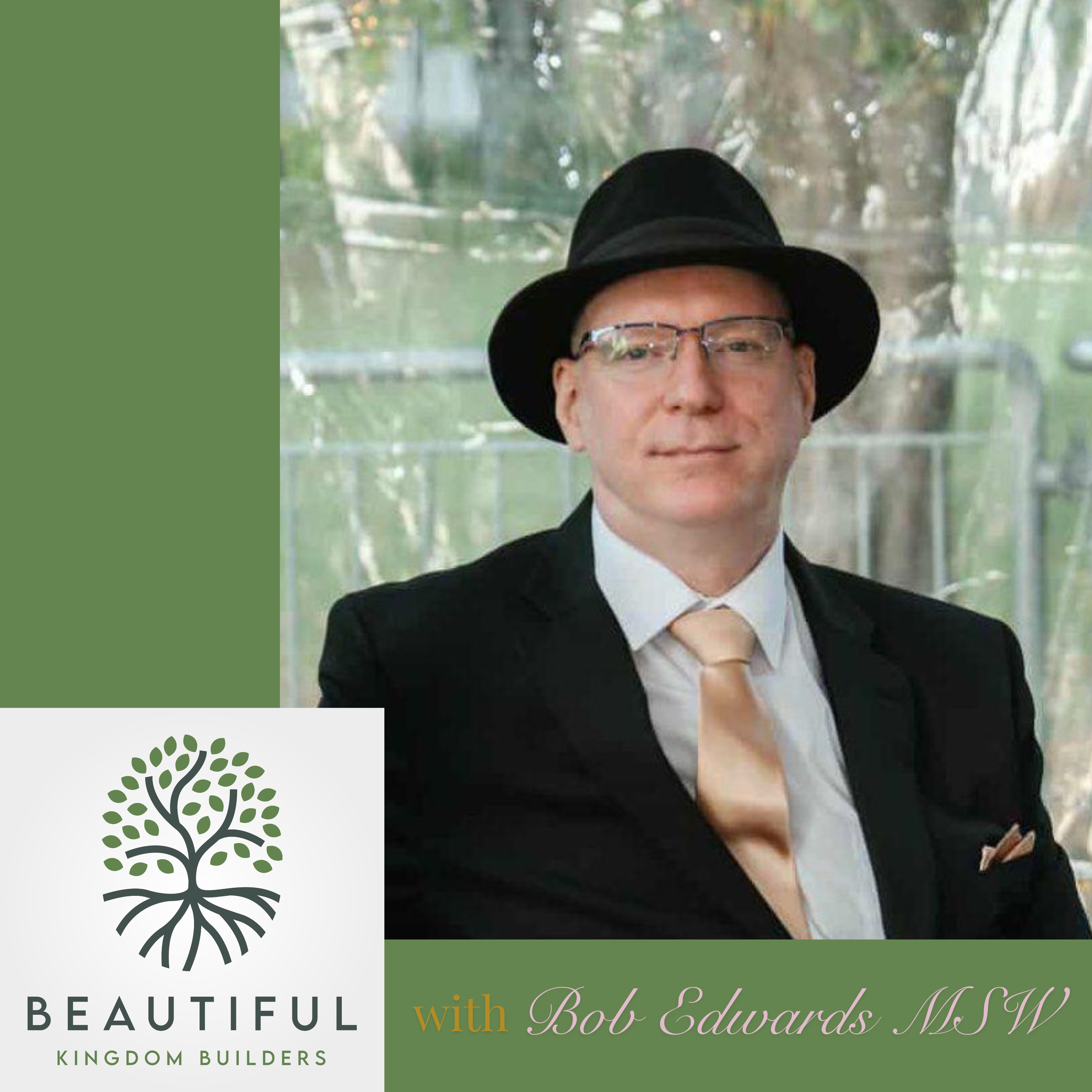

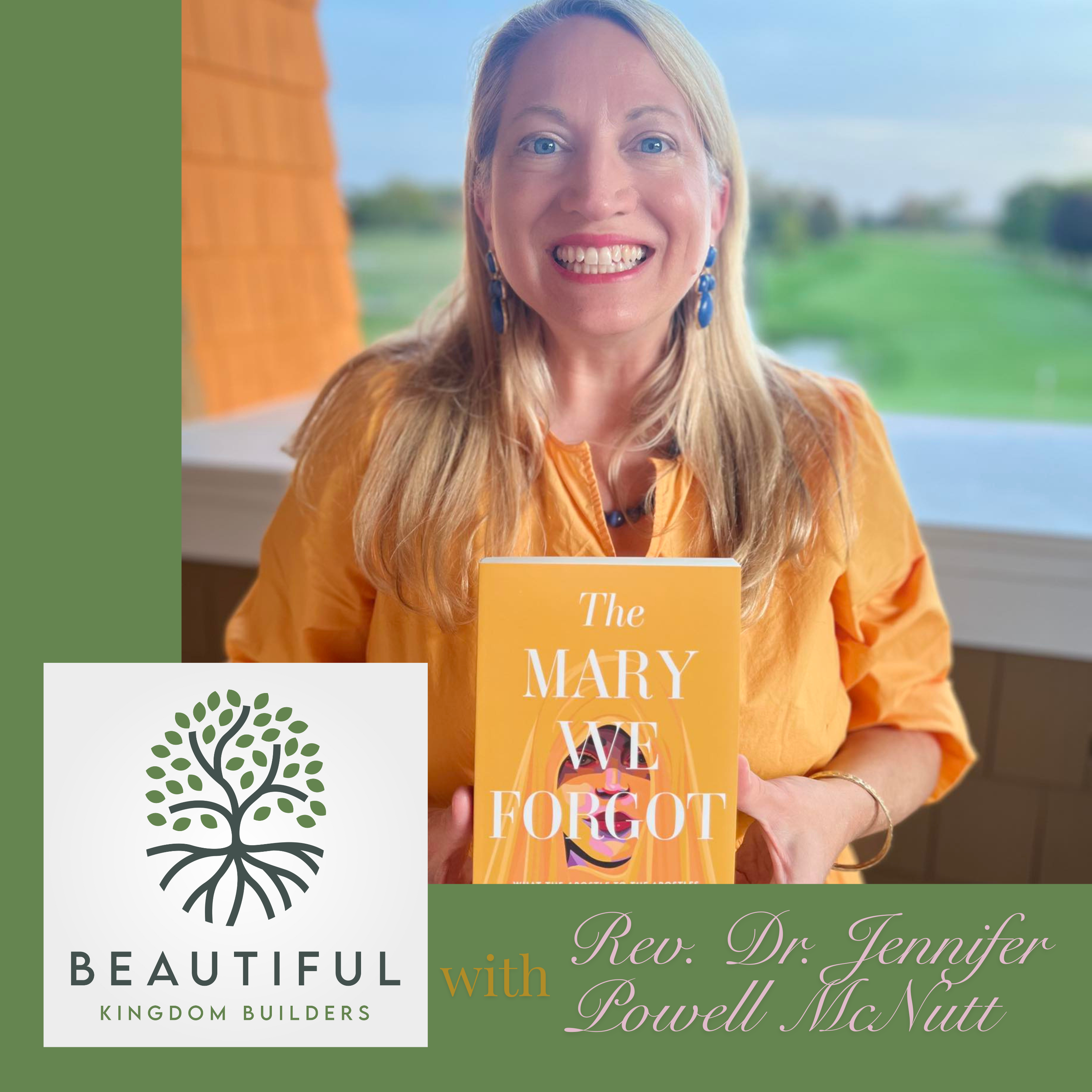


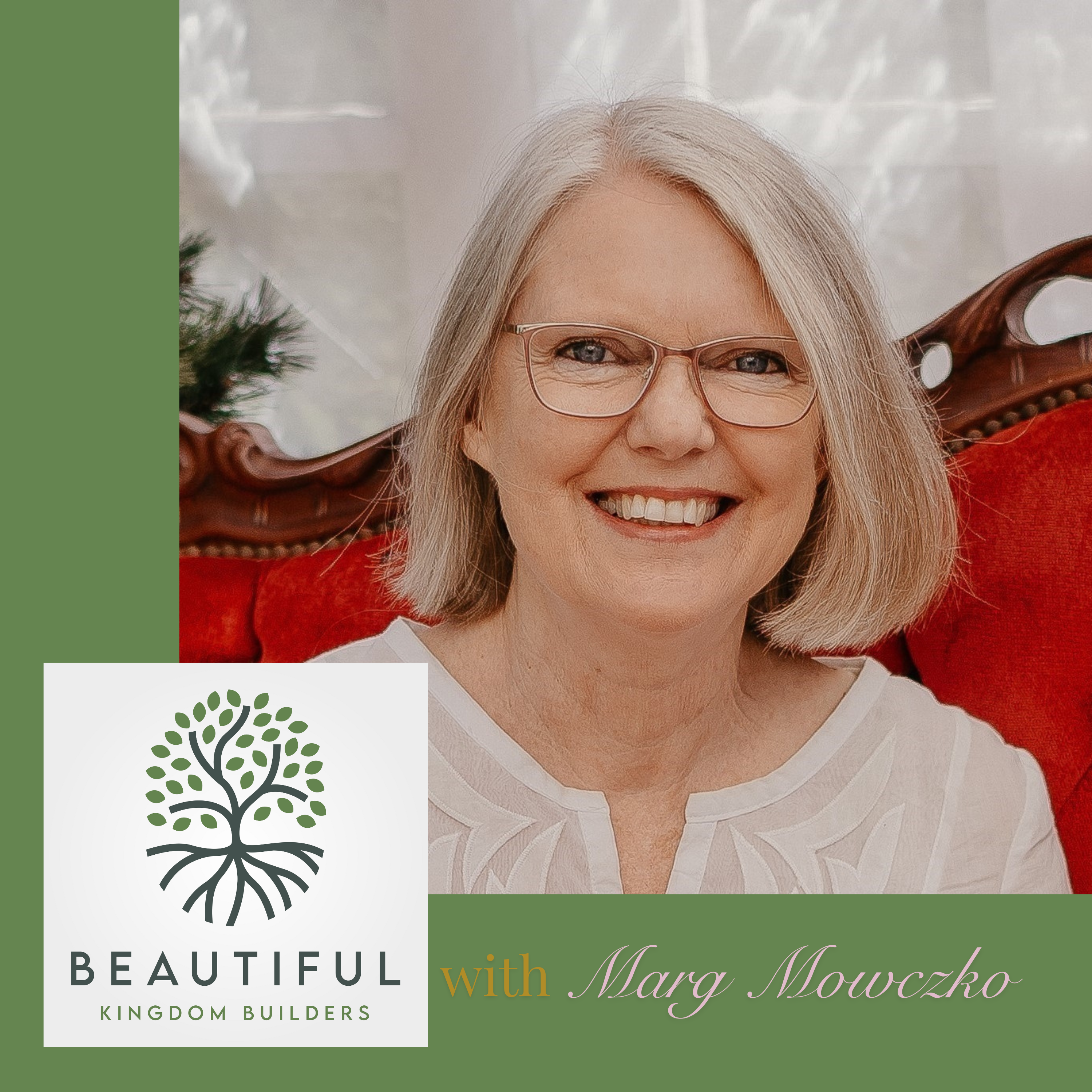


 The Beautiful Kingdom Builders